Campbeltown, Scotland
Glen Scotia Double Cask
- Sweet
- Dried fruit
- Spicy
Distillery
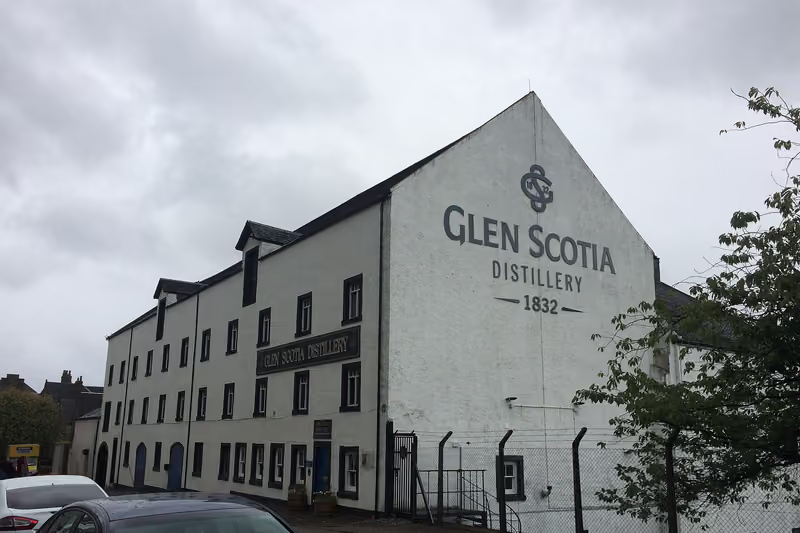
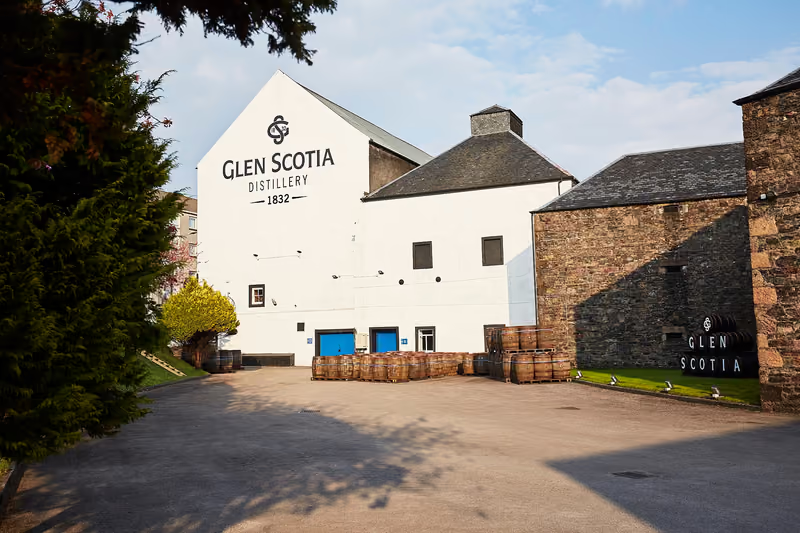
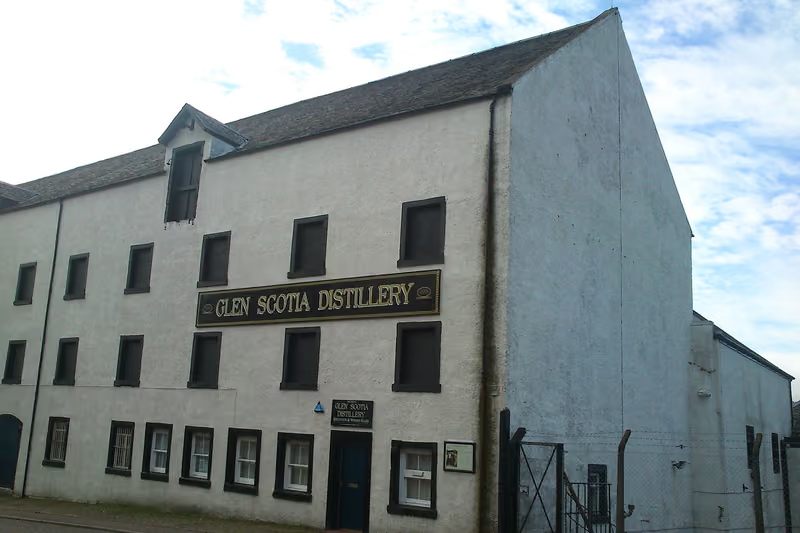
Glen Scotia is one of the three remaining distilleries in Campbeltown, on the Kintyre peninsula, the region that at the end of the 19th century was considered the whisky capital of the world. It belongs to Loch Lomond Group. It is a small, traditional distillery, reputed to have a ghost, which has regained prestige in recent years. Its style combines fruit, sweetness and the briny, oily character typical of Campbeltown.
History, style and where to startSee it on the world mapGlen Scotia official website(opens in a new tab)
Campbeltown, Scotland
Campbeltown, Scotland
Campbeltown, Scotland
Campbeltown, Scotland
The distillery was founded at the beginning of the 1830s, when Campbeltown had dozens of working distilleries. With the crisis of the early 20th century, the closure of the nearby coal mines and Prohibition in the United States, almost all of them closed, and Glen Scotia was one of the few survivors, although it went through long periods without producing. According to local legend, the ghost of a former owner haunts the distillery. After several changes of owner, in the 2010s it passed to Loch Lomond Group, which invested in it and renewed its range to a warm reception.
Glen Scotia’s style is that of Campbeltown: ripe fruit, vanilla, caramel, a briny touch and an oily texture, with a very faint smoke in some versions. The house combines bourbon casks with sherry and other wine casks, which bring sweetness and spice. It is a whisky with more body and coastal character than the Highland average. The house’s peated editions reinforce the maritime side with moderate smoke.
Average flavour profile of its 4 whiskies in the catalogue
Glen Scotia Double Cask matures in bourbon casks and finishes in Pedro Ximénez sherry casks, and is a good gateway to Campbeltown: sweet, fruity and with a briny touch. You’ll like it if you’re after coastal malts with sweetness. If the region interests you, compare it with Springbank and Kilkerran, its two neighbours. It is a highly recommendable distillery for discovering Scotland’s smallest region.
This text was generated and translated by AI and may contain errors. Founding year, owner and official website come partly from Wikidata.